




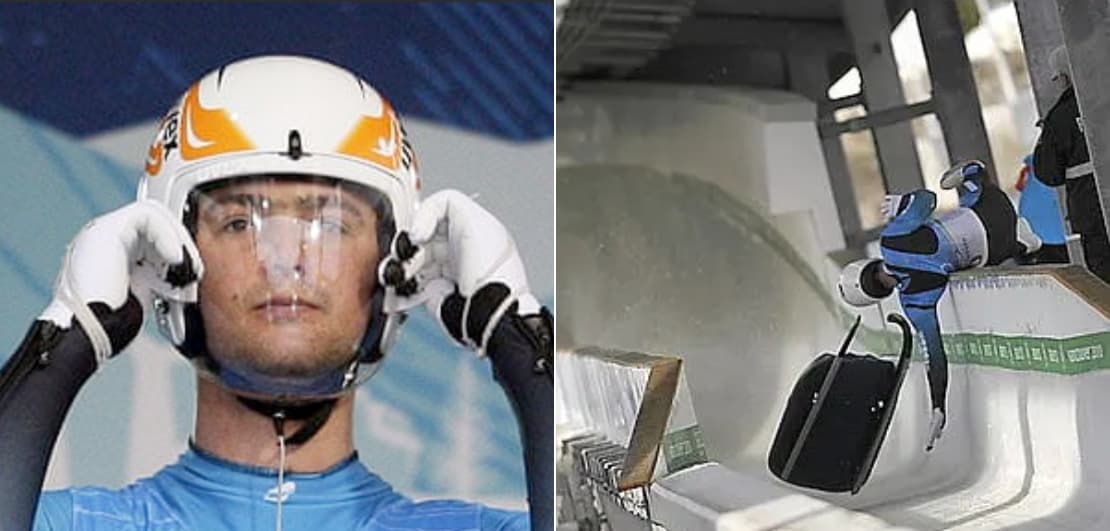
A Promising Olympic Dream Cut Short: The Winter Olympics celebrate courage, speed, and the pursuit of excellence. But sometimes, the risks of high-speed sports turn into tragedy. One of the most heartbreaking moments in Olympic history came on February 12, 2010, when Georgian luger Nodar Kumaritashvili lost his life during a training run at the Vancouver Winter Games.
At just 21 years old, Kumaritashvili had arrived in Canada for what was supposed to be his Olympic debut. Instead, the accident shocked the sporting world and raised serious questions about athlete safety in high-speed winter sports.
Who Was Nodar Kumaritashvili?
| Detail | Information |
|---|---|
| Full Name | Nodar Kumaritashvili |
| Date of Birth | November 25, 1988 |
| Age at Death | 21 years |
| Country | Georgia |
| Sport | Luge |
| Turned Professional | 2008 |
Kumaritashvili came from a family deeply connected to luge. His grandfather helped introduce the sport in Georgia, while his father and uncle were also involved at competitive levels. Growing up in the mountain town of Bakuriani, he began training at the age of 13.
Despite financial challenges, he traveled long distances to compete internationally and steadily worked his way into the World Cup circuit. By 2010, he had qualified for his first Olympic appearance.
The Fatal Crash at Vancouver 2010
What Happened?
On the morning of the opening ceremony, Kumaritashvili was taking part in his final training run at the Whistler Sliding Centre.
- He lost control in the final turn of the track
- The sled struck the wall and launched him into the air
- He was thrown over the side barrier
- He hit an unpadded steel support pole at nearly 145 km/h (90 mph)
Medical teams responded immediately, but he died shortly after from his injuries.
This became:
- The fourth death during Winter Olympic preparations
- One of the most widely discussed safety incidents in Olympic history
Investigation Findings: What Caused the Accident?
Investigations concluded that the tragedy resulted from a combination of factors, not a single failure.
1. Extremely High Speeds
- Track was designed for about 136 km/h
- Actual speeds reached nearly 154 km/h
- Faster sled technology also contributed to higher speeds
2. Technical Difficulty of the Track
The Whistler course was considered:
- One of the fastest ever built
- Highly technical with tight curves
- Challenging even for experienced athletes
3. Limited Experience on the Track
Reports noted that Kumaritashvili had relatively limited runs on this particular course, putting him at a disadvantage in the high-pressure Olympic environment.
The death was officially ruled accidental, caused by an interaction of speed, track difficulty, and loss of control.
Immediate Safety Changes After the Tragedy
The accident led to urgent modifications before competition resumed.
Emergency Measures
- Start position moved lower to reduce speed
- Walls raised at critical sections
- Padding added to exposed metal structures
- Ice profile adjusted near the finish area
Training resumed the next day after these changes.
Long-Term Impact on Winter Olympic Safety
The tragedy triggered wider changes in sliding sports.
- Greater focus on speed control in track design
- Increased mandatory training runs for athletes
- Improved protective barriers and padding
- Future tracks designed to keep speeds within safer limits
The International Luge Federation also emphasized reviewing sled technology and course engineering to prevent similar incidents.
Global Reaction and Emotional Tribute
The Georgian team considered withdrawing from the Games but decided to compete in his memory.
At the opening ceremony:
- Athletes wore black armbands
- The Georgian flag carried a black ribbon
- A moment of silence was held
- Flags were lowered to half-mast
In Georgia, thousands attended his funeral, and a street in his hometown was later renamed in his honor.
Even fellow competitors paid tribute—some wore black stripes on their helmets, and the Olympic community united in mourning.
Winter Sports Risk: A Bigger Conversation
Kumaritashvili’s death highlighted the extreme dangers of sliding sports like:
- Luge
- Skeleton
- Bobsleigh
Athletes in these events often reach speeds above 140 km/h, where even small errors can have serious consequences. His accident became a turning point in balancing performance with safety.
Read moreL 2026 Winter Olympics Men’s Figure Skating:
Legacy: More Than a Tragedy
Though his Olympic journey ended before it truly began, Kumaritashvili’s legacy lives on through:
- Safer track designs
- Stronger athlete protection measures
- Greater awareness of risk management in winter sports
His story remains a reminder of the courage athletes show when competing at the highest level—and the responsibility of sporting bodies to protect them.
Like to know? Lindsey Vonn Crash at Winter Olympics 2026
The Winter Olympics are built on bravery, speed, and pushing human limits. Nodar Kumaritashvili’s story is a powerful reminder that behind every record and medal is real risk. His loss changed the way the world looks at safety in winter sports—and his memory continues to shape the future of the Games.
FAQs
When did Nodar Kumaritashvili die?
He died on February 12, 2010, during a training run at the Vancouver Winter Olympics.
How fast was he going during the crash?
He was traveling at approximately 145 km/h (90 mph) at the time of impact.
Was the track considered unsafe?
Investigations found no single safety failure but noted higher-than-expected speeds and technical difficulty as contributing factors.
What changes were made after the accident?
Speed was reduced by lowering the start position, walls were raised, and padding was added to exposed structures.
How old was he when he died?
He was 21 years old.
What was his Olympic status?
He had qualified for the men’s singles luge event, which would have been his Olympic debut.
 Add as a preferred source on Google