


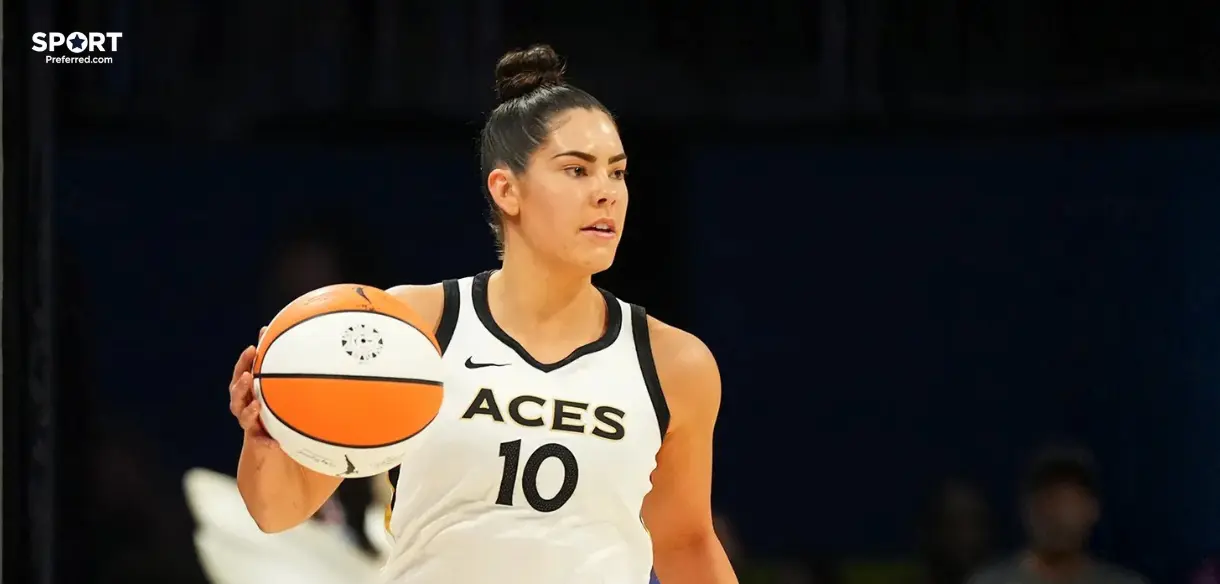
As the clock ticks toward a critical deadline, Kelsey Plum has made her stance clear: WNBA players want to play — not strike.
With negotiations between the WNBA and the Women’s National Basketball Players Association (WNBPA) entering a decisive phase, Plum, who serves as first vice president of the WNBPA, emphasized that a work stoppage would hurt both the league and its players.
The 2026 WNBA season is scheduled to begin May 8, but uncertainty remains as both sides work to finalize a new collective bargaining agreement (CBA).
Kelsey Plum’s Clear Message: Players Want to Play
Plum addressed the ongoing negotiations and the growing speculation about a potential strike.
“I want to play, and players want to play. A strike would be the worst thing for both sides.”
She explained that because the WNBA now operates under a proposed revenue-sharing framework, a strike would directly reduce income for everyone.
“We are in a revenue share system — so no revenue, no revenue to share.”
Her comments reflect a shift in tone. While the union has previously authorized its executive committee to call a strike if necessary, several high-profile players are now publicly urging continued negotiation instead.
The Core Issue: Revenue Sharing
At the center of the negotiations is how revenue will be divided.
Both sides agree on implementing a revenue-sharing system. However, they differ sharply on the details.
Revenue Proposal Comparison
| Topic | WNBPA Proposal | WNBA Proposal |
|---|---|---|
| Revenue Share | 26–27.5% of gross revenue (before expenses) | 70% of net revenue (after expenses) |
| Salary Cap (2026) | $9.45 million starting cap | $5.65–$5.75 million starting cap |
| Avg Salary Projection | Higher immediate jump | $540,000 in 2026 → $780,000 by 2031 |
| Max Salary Projection | Significant increase | Near $2 million by 2031 (with revenue share) |
The union argues that gross revenue percentage better reflects league growth. The league, meanwhile, believes its net revenue structure ensures long-term sustainability.
Salary Cap Disagreement Remains
Another major sticking point is the starting salary cap for 2026.
- League offer: Around $5.65–$5.75 million per team
- Union request: $9.45 million in Year 1
The gap remains wide, though negotiations have reportedly intensified in recent weeks.
Movement on Rookie Contracts
One area of progress involves rookie-scale contracts for star players.
Under the latest proposal:
- All-WNBA players on rookie deals could sign maximum extensions in Year 4.
- MVP winners on rookie contracts could qualify for supermax extensions.
- Core designation (similar to franchise tagging) would not apply in these early max deals.
This would allow young stars to earn elite contracts sooner, marking a meaningful structural shift.
Breanna Stewart Also Cautions Against Strike
WNBA star and union co-vice president Breanna Stewart echoed Plum’s concerns.
“I don’t think a strike is good for anyone.”
Stewart acknowledged that negotiations are not finished but emphasized urgency as deadlines approach.
March 10 Deadline Approaching
League officials reportedly set March 10 as a target date to reach an agreement.
If no deal is reached:
- Training camp schedules could be impacted.
- The May 8 season opener may face delays.
- Financial consequences would affect both players and teams.
NBA Commissioner Adam Silver has also urged both sides to increase urgency, noting that negotiations often conclude at the “11th hour.”
Financial Stakes for Both Sides
The league has argued that some union proposals could result in substantial long-term financial losses. Meanwhile, players believe the league’s growing popularity and commercial success justify a higher revenue share.
Both sides recognize that:
- Fan interest is at a high point.
- Player popularity is rising.
- Momentum for women’s basketball is strong.
Disruption now could stall that progress.
Plum described the revenue-sharing breakthrough itself as a “significant win,” but she made clear that more work remains.
She emphasized:
- Continued negotiation is possible without striking.
- The focus should remain on progress, not confrontation.
- Players want to protect both current gains and future growth.
Her leadership voice carries weight, especially as first vice president of the union
Kelsey Plum has made one thing clear: the players want to compete, not sit out.
Read more: Kyle Kuzma Moves to Bench as Giannis Returns
The introduction of revenue sharing marks a historic step forward for the WNBA, but the final terms must satisfy both financial sustainability and fair compensation.
As negotiations reach their final stretch, urgency is rising — but so is the desire to protect the league’s growing momentum.
The coming days will determine whether the 2026 WNBA season begins as scheduled or faces disruption. For now, the message from Plum and other leaders is simple:
Keep negotiating. Keep the games on the court.
 Add as a preferred source on Google