



College football overtime delivers some of the most dramatic finishes in American sports. With rule updates in recent years and a renewed focus on keeping games shorter and fairer, the 2026 overtime structure is now more streamlined and intense than ever.
Below is a complete, easy-to-understand breakdown of all overtime rules for the 2026 season—how it works, what changes after each overtime, scoring rules, 2-point conversions, timeouts, and how it differs from the NFL.
Overtime Overview: How a Game Enters OT
When a college football game is tied at the end of four quarters, it automatically moves into overtime. A winner must be decided—there are no ties in today’s format.
There is no game clock in overtime. Only the play clock operates, ensuring teams run plays on time but without the pressure of a running period clock.
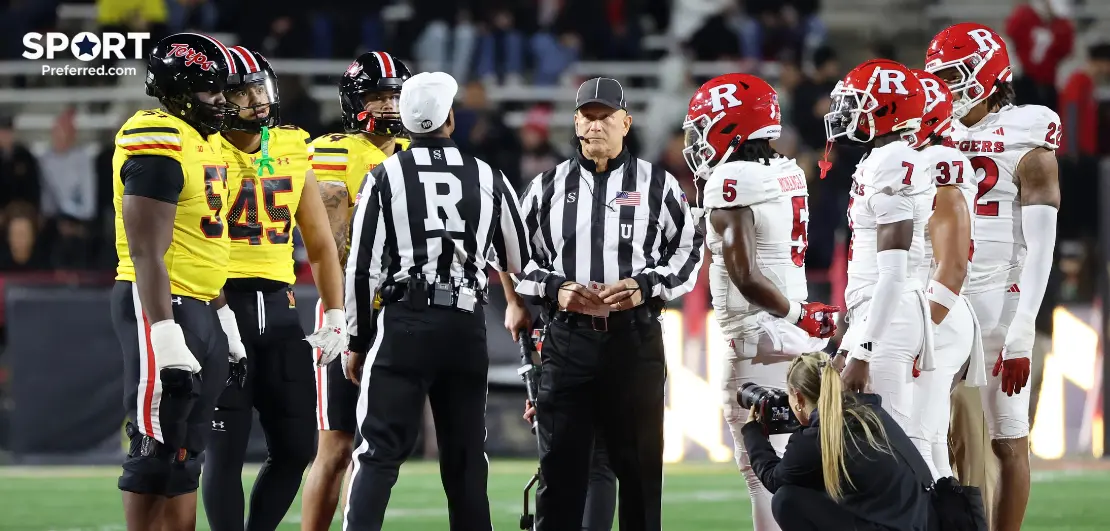
Coin Toss & Possession Choice
At the start of overtime:
- Team captains meet at the 50-yard line.
- The visiting team’s captain calls heads or tails.
- The winner chooses:
- Offense or defense first, or
- Which end of the field will be used.
Most teams prefer to go on defense first, so they know exactly what score they need when they take possession.
The team losing the toss receives the remaining option.
Read Also: Top 10 Biggest Football Stadiums in the World 2026
How Possessions Work in Overtime
Each team receives one possession per overtime period during the first two OTs. Drives always start at the opponent’s 25-yard line, unless a penalty changes placement.
A possession continues until:
- The team scores a touchdown,
- Kicks a field goal,
- Fails to convert a first down, or
- Turns the ball over.
If one team outscores the other in the same OT period, the game ends.
Timeout Rules in 2026
A latest change affects timeout structure:
- 1st Overtime: Each team gets one timeout
- 2nd Overtime: Each team gets one timeout
- 3rd Overtime onward: Only one total timeout is allowed for the remainder of the game
Timeouts from regulation do not carry forward. Timeouts from earlier OTs also do not roll over.
What Changes After Each Overtime?
First Overtime
- Both teams start possessions at the opponent’s 25-yard line.
- Extra point (PAT) is allowed after touchdowns.
Format: Standard possessions
Goal: Outscore opponent in equal possessions
Second Overtime
The format stays the same—one possession each from the 25.
But a major rule applies:
- Touchdowns require a mandatory 2-point conversion attempt.
No kicking the PAT.
Why?
To reduce marathon-length games.
Third Overtime and Beyond
From the third OT:
- No more drives from the 25-yard line.
- Teams run alternating 2-point conversion attempts from the 3-yard line.
Each attempt counts as its own overtime period.
This continues until:
- One team converts its attempt
- The other fails
That team wins the game.
This format has created legendary multi-overtime thrillers in recent seasons.
Overtime Rules 2026 Summary
| Overtime Period | Starting Position | Scoring Rules | 2-Point Requirement | Game Clock |
|---|---|---|---|---|
| 1st OT | Opponent’s 25-yard line | One possession each | Optional | No game clock |
| 2nd OT | Opponent’s 25-yard line | One possession each | Mandatory after TD | No game clock |
| 3rd OT+ | 3-yard line | One 2-point play per team | All plays are 2-point attempts | No game clock |
Can a College Football Game End in a Tie?
No.
Since the introduction of overtime in the mid-1990s, games continue until one team scores more than the other in a given OT period.
This rule applies to:
- Regular season
- Bowl games
- College Football Playoff
- National Championship
See Also: Most Valuable Players at AFCON 2025
How Overtime Differs From the NFL
College and NFL overtime systems are very different.
1. Guaranteed Possessions
- College: Both teams always get a possession (except in 2-point rounds).
- NFL: First-drive touchdown ends the game.
2. No Game Clock
- College: No overtime clock, only play clock.
- NFL: 10-minute OT in regular season, 15 in playoffs.
3. No Kickoff in OT
- College: Ball starts at the 25-yard line.
- NFL: Kickoff starts overtime.
4. No Ties in College
- NFL regular-season ties are still possible.
Why the 2-Point Format Was Introduced
The alternating 2-point shootout was created to:
- Prevent extremely long games
- Reduce player fatigue
- Limit injury risks
- Keep overtime fast and decisive
Major marathon games played a major role in changing the format. The updated rules have already produced some unforgettable multiple-overtime finishes.
Summary
The 2026 college football overtime format balances excitement, fairness, and player safety. By ensuring equal possession opportunities, reducing game length through mandatory 2-point attempts, and eliminating ties, the system continues to deliver some of the most thrilling moments in modern sports.
Whether it’s a rivalry game, a bowl matchup, or a College Football Playoff battle, overtime guarantees intensity until the final play.
 Add as a preferred source on Google