



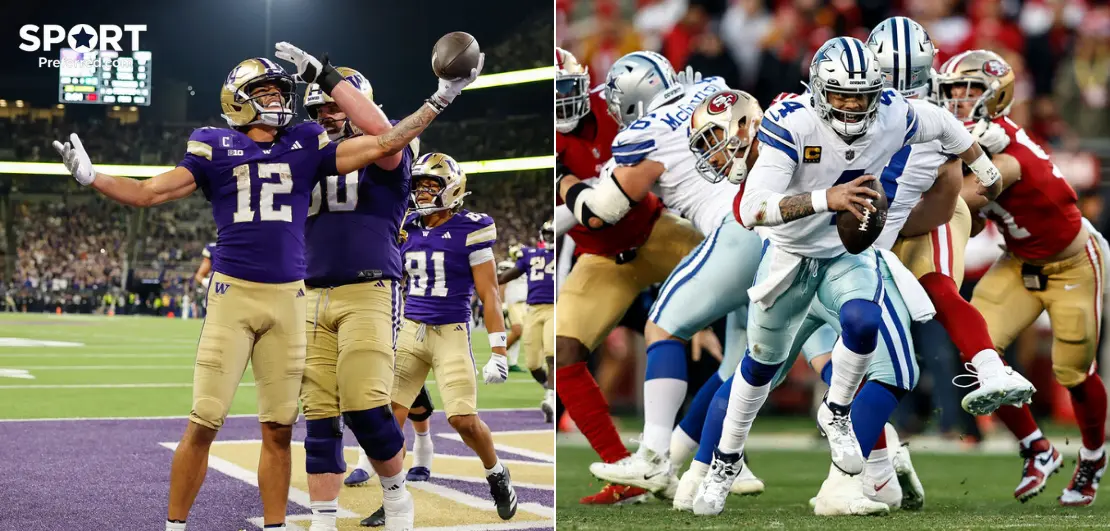
College football and the NFL both use overtime to break a tie, but the rules are very different. These differences change the strategy, excitement, and length of games. Here is an easy explanation of how college overtime works and how it compares with the NFL system.
Overtime Basics: What Triggers OT?
In both college football and the NFL:
- Overtime happens when the game is tied after regulation.
But from that point, the formats become very different.
College Football Overtime Rules vs NFL (Comparison)
| Feature | College Football | NFL |
|---|---|---|
| Kickoff in OT | No kickoff | Kickoff starts OT |
| Starting Position | Opponent’s 25-yard line | Normal field position after kickoff |
| Guaranteed Possession | Yes, both teams get the ball | Not always; TD ends it |
| Game Clock | No clock | 10 or 15 minutes |
| Ties Allowed | No | Yes in regular season |
| 2-Point Rules | Mandatory after 2nd OT; 2-point only from 3rd OT | Standard rules |
| Max Overtimes | Unlimited | 1 in regular season; unlimited in playoffs |
1. Starting the Overtime – Kickoff vs. No Kickoff
College Football
- No kickoff.
- Each team starts directly at the opponent’s 25-yard line.
NFL
- Overtime begins with a kickoff, just like the start of a half.
Read Also: College Football Overtime Rules 2026: Format, Changes
2. Possession Rules – Equal Chances vs. Sudden Death
College Football
- Both teams always get a possession.
- Drives start at the 25-yard line.
- If the score is tied after each team has the ball, the game continues to another overtime.
NFL
- The team receiving the kickoff gets the first chance.
- If they score a touchdown, the game ends immediately.
- If they score a field goal, the other team gets a possession.
- After both possessions, the next score wins.
- In the regular season, the game can end in a tie.
3. Clock Rules – No Game Clock vs. Timed Period
College Football
- There is no game clock in overtime.
- Only the play clock is used.
- Each overtime is played until both teams finish their possession.
NFL
- Overtime is timed:
- Regular season: 10-minute period
- Playoffs: 15-minute periods
- The clock can run out, ending the game (ties allowed in regular season).
4. 2-Point Conversion Rules
College Football
- After the 2nd overtime, teams must attempt a 2-point conversion after a touchdown.
- From the 3rd overtime onward, teams take turns running only 2-point conversion plays (no full drives).
NFL
- Touchdowns are followed by a normal PAT or 2-point attempt.
- No switching to 2-point-only format.
5. Number of Overtimes Allowed
College Football
- Unlimited overtimes until a winner is found.
- No ties possible.
NFL
- Regular season: One 10-minute OT → tie possible.
- Playoffs: Overtime continues until one team wins.
Read Also: Top 10 Biggest Football Stadiums in the World 2026
6. Winning the Game
College Football
- A winner must be decided, even if the game takes many overtimes.
NFL
- Regular-season games can end in a tie.
- Playoffs continue until a winner is found.
Conclusion
College football overtime is designed for fairness and excitement, giving both teams an equal chance and forcing quick decisions through 2-point attempts. The NFL format focuses on speed and sudden-death drama, but can end in ties and gives an advantage to the team receiving the ball.
Both systems create thrilling endings—but college overtime is often more unpredictable and explosive
 Add as a preferred source on Google